Pick the Model for the Job
Models are instruments, not personalities. Match the seat to the phase (UI, plan, refactor, review), write the stop condition, and demand the proof that seat is for.
Models are instruments, not personalities. Match the seat to the phase (UI, plan, refactor, review), write the stop condition, and demand the proof that seat is for.
The phone is not a tiny laptop. It is a valid control surface for agents, as long as the seam to the desk is a contract, not a vibe.

A paid AI stack only becomes leverage when each tool has a job, a handoff, and an owner. Receipts without roles just multiply tabs.

Letting an agent chase a UI bug across days is easy. Making that run bounded, reversible, and inspectable is the actual skill.

Coxon quit. Hubinger said >10% and "no plan." The story isn't extinction. It's an org that treats catastrophic risk as compatible with shipping harder.

Nearly every enterprise has bought into AI. Almost none are running agents at scale. The distance between those two facts is the most useful number a founder can hold this year.
Nearly a quarter of what goes wrong is a check that said yes. Even when the check is right, green is still not a ship decision.

Gartner expects more than 40% of agentic AI projects to be canceled by the end of 2027. None of the three reasons it names is a model-capability problem. The gap that kills agents in production is organizational, and we already know how to close it.

The most-cited number about AI and jobs is real, and almost everyone repeats it wrong. Here is what the Stanford paper actually found, what its authors refuse to claim, and the one fact in it worth building a hiring plan on.

Nearly a quarter of what goes wrong in multi-agent systems is a verification failure. The most common one is a check that ran, and said yes.

You debug the agent that produced the bad output. The bug was in the message it got handed.

Going from one agent to many does not multiply what you can do. It moves every failure into the space between them.

You bounded what your agent can touch, gave it an undo button, and taught it when to ask. But when it does something surprising, can you reconstruct exactly why? That is the observability gap.

Full autonomy is the wrong goal. The best agents know exactly when to stop and hand the decision back to you.

You can bound what an agent touches and measure when it fails. Neither one saves you if the mistake it makes cannot be taken back.
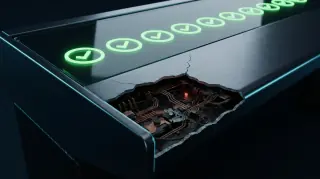
A passing test and a working workflow are not the same thing. The gap between them is where production breaks.
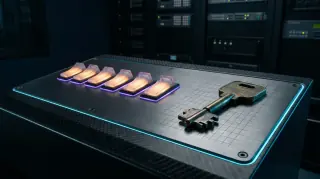
The next reliable AI workflow starts with deciding what the agent is allowed to touch.

The best AI work happens when delegation is repeatable, visible, and bounded.

The new security bottleneck is triage, patching, and judgment.

Computer use turns AI coding from text generation into software operation.
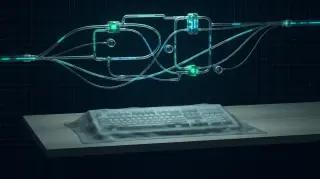
AI did not make me obsolete. It moved my job up the stack.

Solo building is a superpower. But superpowers have side effects.

AI can build anything. The hard part is getting anyone to care.

AI made execution cheap. The scarce resource now is knowing what to build.

The most expensive part of building used to be people. AI just zeroed out that line item.

As AI-generated code floods production, the security bills are starting to come due

What Actually Has 10x Impact

Billion-dollar companies still ship interfaces from 2003. The tools to fix that now cost $0 and take minutes.

AI didn't just lower the barrier to entry. It removed it entirely.

A year of working alongside AI teammates reshaped how I think about building software

What happens when you hand off a real task to an AI teammate